GECKO Governance
Making governance software easier to learn and use.
Creating technical documentation and interface guidance for a B2B governance and compliance platform, translating complex functionality into practical, understandable content.
Technical writing · Content design · UX writing · Product documentation
- Role
- Product Manager / Lead Technical Writer
- Period
- 2019–2021
01 / Context
Helping users understand a complex product.
GECKO Governance developed software to help organisations manage governance and compliance activities.
The platform brought together interconnected functionality for projects, tasks, workflows, documents, reporting and other operational processes.
As a B2B application, it required guidance that could help users understand both individual features and how those features worked together.
My work involved developing the product documentation, explaining functionality through instructional content and supporting clearer communication within the application itself.
02 / Technical documentation
Building the documentation from the ground up.
I developed GECKO's user documentation, writing explanations and step-by-step instructions to help people understand and use the platform.
The documentation covered getting started, navigating the application and working with more involved features such as projects, tasks and workflows.
Alongside the written guidance, I captured supporting application screenshots, organised content into navigable sections and used notes, warnings and best-practice guidance to explain important behaviours and considerations.
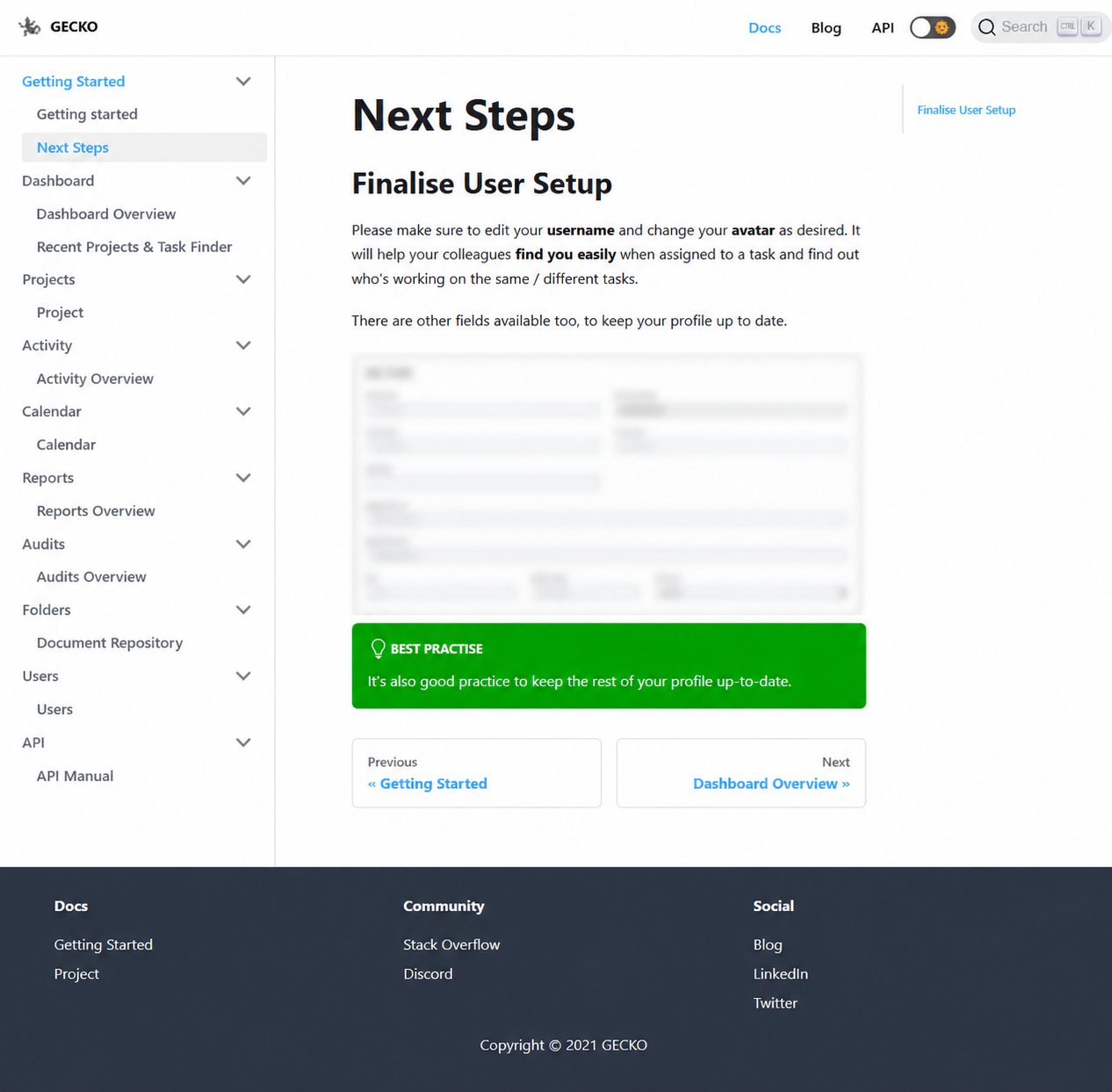
An extract from GECKO's user documentation, showing onboarding guidance, structured navigation and contextual best-practice advice. Application details have been obscured.
View full Next Steps documentationThe documentation was designed to provide more than a reference to individual controls. It helped users move through the application, understand its functionality and find guidance when they needed it.
03 / Instructional content
Explaining how things work — and when to use them.
Some product features required more than instructions for completing a task.
For example, subtasks and recurring tasks could appear similar, but served different purposes. Users needed to understand the distinction before deciding which functionality to use.
The documentation explained these concepts through practical scenarios, then provided instructions for creating and managing them.
It also highlighted important behaviours, such as how recurring tasks are generated and what happens to completed or archived tasks.
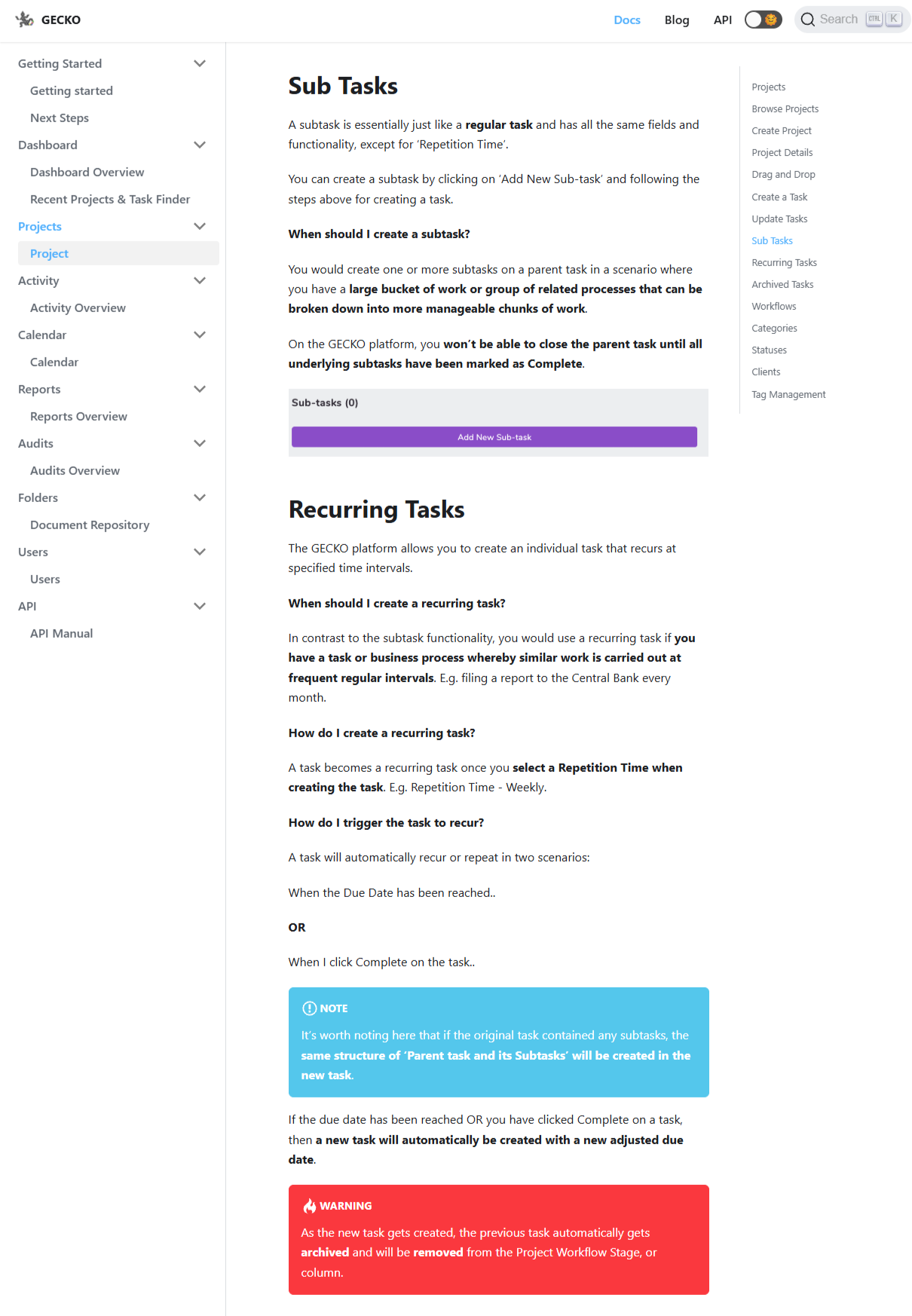
Documentation explaining subtasks and recurring tasks through practical examples, task guidance and contextual notes and warnings.
View full task documentation04 / UX writing
Making the interface easier to understand.
My work also extended into the language used within the application.
I developed UX writing principles and guidance covering interface terminology, clarity and consistency, alongside specifications for tooltips and contextual help.
These specifications were shared with developers, and I subsequently reviewed the implemented guidance during QA.
The aim was to make functionality easier to understand at the point of use, complementing the more detailed instructions available in the documentation.
Writing guidance
Establishing principles for clear and consistent product language.
Microcopy specifications
Defining tooltip and contextual guidance for implementation.
Implementation and QA
Working with developers and reviewing how content appeared within the product.
05 / Contribution
Documentation and guidance across the product experience.
The work brought together two complementary forms of content: detailed documentation that users could consult when learning the platform, and contextual interface guidance intended to help them understand functionality while using it.
My contributions included writing the user documentation, producing instructional screenshots, developing UX writing guidance, specifying microcopy and reviewing implemented content with the development team.
- Product documentation developed from the ground up.
- Instructional content and supporting screenshots.
- UX writing principles and microcopy specifications.
- Implemented guidance reviewed during QA.
Additional documentation samples available on request.
Explore published writing